Friday, May 20, 2011

Wool Sower Gall Wasp - Callirhytis seminator
Click the pic to enlarge


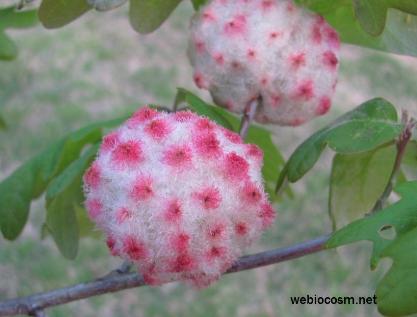
Several weeks ago my neighbor showed me these interesting growths on one of his white oak trees.


Click the pic to enlarge


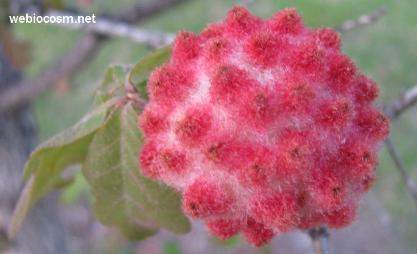
I thought it probably was some type of gall so after a few minutes research I found that it was a gall produced by a small wasp called a wool sower gall wasp, Callirhytis seminator, which only makes its galls on white oak trees. The female wasp lays her eggs in the plant and after hatching, the grubb induces the gall formation.


Click the pic to enlarge


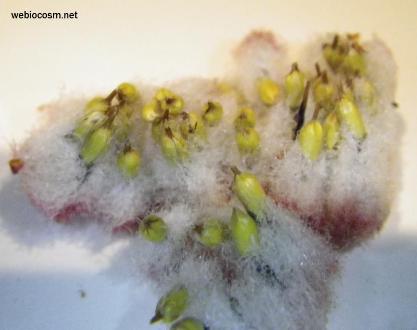
In the center of these galls are tiny seed-like structures, which is why this type of gall is sometimes also called an oak seed gall. Each one contains a larva which is protected and nourished by the tree.
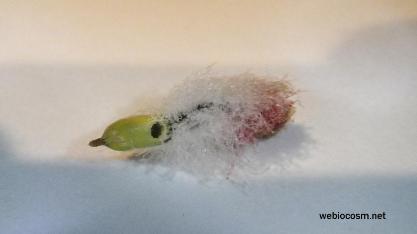


Click the pic to enlarge


I cut of a few of the galls from the tree and brought kept them in my garage. After about 2 weeks they had all made their way out of the gall leaving these neat little holes in the side of the galls.
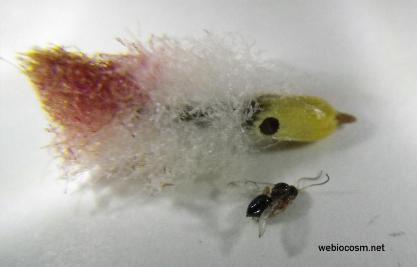


Click the pic to enlarge


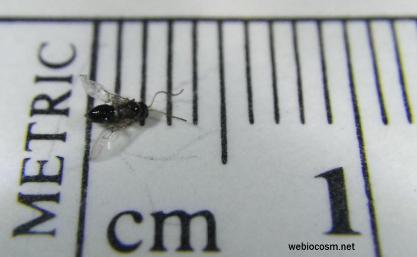
Here are some close-ups of the tiny wasps.
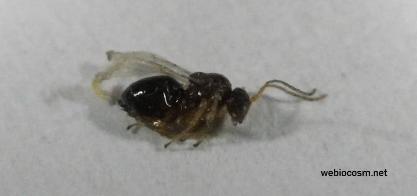

Click the pic to enlarge


Click the pic to enlarge


For More information:
Galls on Oaks - NC State University
Springfield Plateau Wool-sower Gall
Wikipedia - Gall Wasp


And don't forget to check out Friday Ark #340!


Labels: , , , , , , , ,

Tuesday, July 05, 2005

Ethanol and Biodiesel from Crops not Worth the Energy

Via Eureka Alert:

Cornell ecologist's study finds that producing ethanol and biodiesel from corn and other crops is not worth the energy-ITHACA, N.Y. -- Turning plants such as corn, soybeans and sunflowers into fuel uses much more energy than the resulting ethanol or biodiesel generates, according to a new Cornell University and University of California-Berkeley study....complete story.

My father, who is a farmer, has been telling me this for years now, and I didn't find it too hard too believe, but I have remained hopeful.
The final paragraph of the story sums it up well:
"Ethanol production in the United States does not benefit the nation's energy security, its agriculture, economy or the environment," says Pimentel. "Ethanol production requires large fossil energy input, and therefore, it is contributing to oil and natural gas imports and U.S. deficits." He says the country should instead focus its efforts on producing electrical energy from photovoltaic cells, wind power and burning biomass and producing fuel from hydrogen conversion.


This is the only thing I've seen on this recently, but I'm sure there are plenty of people ready to refute these findings. If no one can reasonably argue with the energy balance of the current process described in the study, I can see where one could argue whether it is a project worth continuing. I think at the very least we can assume that the process will become more efficient, and as it stands could be considered a bridge to an improved process that is a benificial alternative to burning fossil fuels.

I would like to know what these folks would say about the thermal depolymerization process which I have previously mentioned here.

Labels:

Thursday, February 03, 2005

Thermal Conversion Process update

Here is an update from Fortune about Changing World Technology's venture to commercialize the TCP. It looks like they may be having some setbacks, but that is to be expected.
I originally mentioned this here

Labels: ,