My mother collected these "doodlebugs" a few days ago to show my children. I got interested and decided to try to video them in action. They are called doodlebugs because of the doodly patterns they sometimes make in the sand when moving about. They are also called antlions because ants are a staple of their diet. We have fed them so many ants and they always seem ready for more. Antlions are the larval form of an insect in the order Neuroptera, which also includes the green lacewing. They are classified in the family Myrmeleontidae, genus Myrmeleon. I do not know which species this individual belongs to.
It is really interesting to watch them build and use their sand pit traps. They move backwards burrowing into the sand in a circular pattern while tossing the sand out of the pits with rapid jerking of their heads. When the pit is deep enough they sit at the bottom with only their jaws exposed and wait on their prey, usually ants. If the ant is able to gain the footing to get out, the antlion showers it with sand causing it to slide back to the bottom.
This young rabbit was found at my dad's doorstep several weeks ago. We believe it was killed and delivered by his cat. I had been thinking about doing a time-lapse of a decomposing animal for quite a while and figured that I would make the best of this fresh carcass. I built a box using a wooden frame and chicken wire to allow smaller animals and bugs in while keeping out the larger animals that might just drag it off. Here is the "rot box". Since the lid is removable to allow full sunlight, I may call it the "grow box" for future projects.
Here is the box after this project was completed with the lid open and the camera in place.
For the filming I used my new Pentax Optio WG-1 which is really durable and versatile. I started taking 1 picture every 12 minutes, but as the action sped up over the last two days I increased the frequency to once every 5 or six minutes. On the last day when I went out to check the progress, I was disappointed to see the whole rabbit was gone. There were no bones or anything left, so I thought a snake or something had gotten in and carried it off. However, after watching the playback, I realized that the maggots had devoured the entire rabbit. I was expecting a skeleton to stay together for several weeks and had planted some grass seeds to grow up and eventually beautify the whole gory scene, but it went way faster than I expected. The entire process took only 4 days.
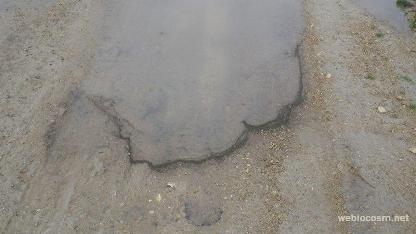
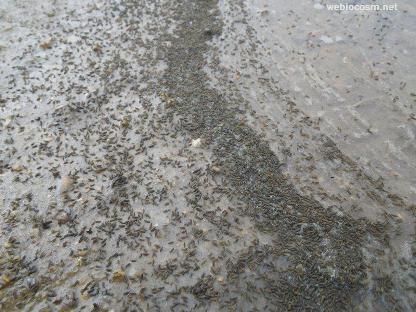
A couple of weeks ago my father, a farmer who shares an interest in biology with me, told me that he had seen a bunch of springtails in the ditches around the fields on our farm. When I got free one afternoon, I went down with my camera to see for myself. I stopped at a large puddle of water in the middle of a gravel road after a big rain. This is what I saw. Click the pics to enlarge.
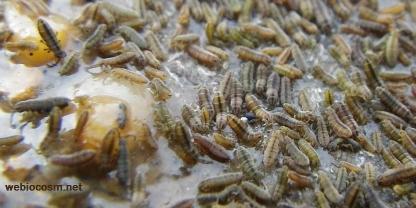
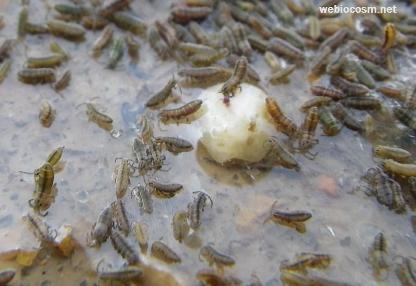
If I hadn't been prepared, I would have thought it was just a puddle with some light debris around the edge, but a closer look revealed the prize I was searching for, an abundance of springtails.
Springtails are hexapods that were previously considered by most to be insects that have now been reclassified by many as having a separate lineage from the insects. Springtails (Collembola) have been classified as an order within the class insecta, or as a subclass of Entognatha alongside insects in the subphylum hexapoda, or if considered to be a basal lineage of hexapoda then they are elevated to a class.
Springtails are small, usually less than 6mm, with these shown being 1-2 mm and are very abundant. Many species are known to be agricultural pests in some cases but beneficial in others.
The name springtail is derived from their spring-like abdominal appendage, the furcula, which is tucked underneath the body and held in place by small appendage called a tenaculum (or retinaculum). When threatened, the springtail rapidly and forcefully extends the appendage, forcing it into the air making it very difficult to catch for closer observation or as a quick meal. Shown below is a video I made of these tiny creatures using my iPhone 4S and olloclip macro lens(both are awesome). You can see the tails extending rapidly, but even under my microscope, I haven't clearly identified the tenaculum which is supposed to hold the furcula in place while tucked under the body. **these creatures had not been harmed or injured when I made this video, they just could not handle the smooth texture of the surface on which they were placed. I quickly released them back to nature after the video was made.** Sources Wikipedia - Springtail and bugguide.net
I recently purchased a Pico Dolly so I could attempt to make a self-contained time-lapse dolly that I could take anywhere.
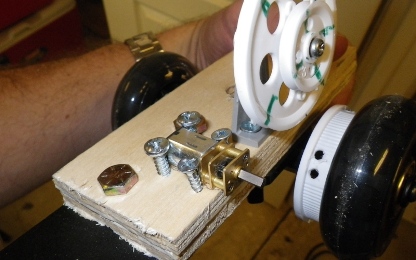
Here is the Pico Dolly with the first step complete. I used the rim of a lid that went to an old pill container and attached it to the inside of the wheel. I had to take the wheel off and then replace it using a small hex key.
I used fishing line tied through the spokes of the wheel to attach the lid so I wouldn't damage the wheel with glue or drill holes.
Next I took 2 pieces of plywood and attached them to the dolly using 1/4 inch bolts through the predrilled standard tripod screw holes in the dolly.
Finally I connected a rubber bands to the pulleys, a battery pack, and a potentiometer to use as an on off switch and to modulate the speed a little further as needed.
Ultimately I had to attach another rim to the front wheel because I had some trouble getting traction with just one wheel and with the elasticity of the rubber band, the motion needed to be a little smoother. Here is the first video I made with this setup.
The biggest draw backs to this rig are that despite gearing down the rpms, it still moves a little too fast for most natural outdoor scenes. Also it has to be on a relatively smooth and level surface.
UDATE: 11/21/11 - Here is my second version using a chain and sprocket system
Termites and Their Pests, Mites and Nematodes (Roundworms)
I found some little termites living large on the fringe of my compost heap so I put one under my Celestron digital LCD microscope and this is what I found. These are mites and nematodes (roundworms) which are both known to parasitize temites (or it may be commensalism in the case of the mite). The roundworms were living in the head of the termite.
My best guess based on the the above paper and not much else is that the organisms here are as follows: Eastern Subterranean Termite - Reticulitermes flavipes Mite - Family Acaridae, Genus Australhypopus Nematode - Family Rhabditidae, Genus Rhabditis
Anyone with more knowledge of these species please feel free to offer corrections in the comments.
I previously posted pics of these human head lice about 6 years ago.
Now I have a new toy sitting in my office waiting for an opportunity to get some better pictures of small critters of this sort. Today I plucked this head louse from the head of a little girl who was brought in to my office to see me for a cold. My astute nurse pointed out the fact that she had lice so I grabbed one to view under my new microscope. The first part is at the lowest power then the final two parts are at a higher power. The final part was done when it was still alive and its innards were still moving. I used a Celestron LCD digital microscope for the video.
I was surprised to learn that aphids give live birth so I read the Wikipedia entry on aphid reproduction. It is far to complex and variable for me to try to summarize here. I will just say that it is quite amazing an worth a read.
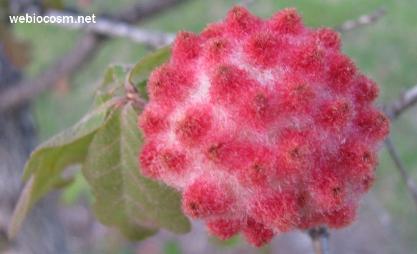
Several weeks ago my neighbor showed me these interesting growths on one of his white oak trees.
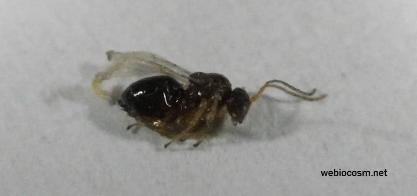
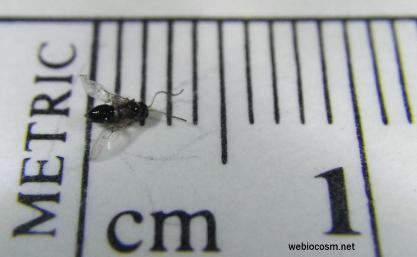
I thought it probably was some type of gall so after a few minutes research I found that it was a gall produced by a small wasp called a wool sower gall wasp, Callirhytis seminator, which only makes its galls on white oak trees. The female wasp lays her eggs in the plant and after hatching, the grubb induces the gall formation.
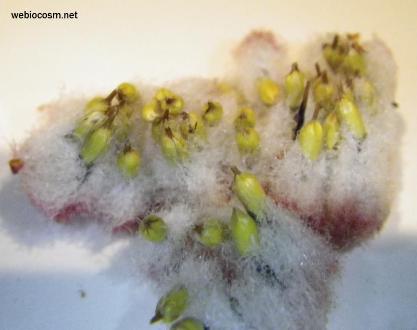
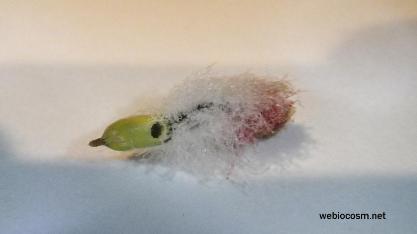
In the center of these galls are tiny seed-like structures, which is why this type of gall is sometimes also called an oak seed gall. Each one contains a larva which is protected and nourished by the tree.
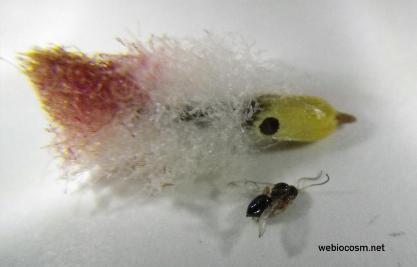
I cut of a few of the galls from the tree and brought kept them in my garage. After about 2 weeks they had all made their way out of the gall leaving these neat little holes in the side of the galls.
For my recent time-lapse of a strawberry, blackberries and raspberries decomposing in a petri dish I used a Pentax Optio W90 which seems to be a great camera for shooting time-lapses. It has a built in intervalometer with lots of flexibility in settings. Also it is weather resistant and can be used outside or underwater. It has two macro settings with one of them for use at 1cm. The intervalometer function can be used with multiple settings such as auto flash and macro. To get around the camera's limited battery life, I ordered an extra Pentax D-Li88 rechargable battery that allows me to switch them out periodically and let one charge while the other is being used. Charge time is about 2 hours or less. With my setup, I attached the camera to a sturdy block, with the opening for changing batteries off to the side so I could change the battery every 3-5 days without moving the camera at all. The camera automatically took one picture every 20 minutes and it is played back at 30 frames per second. I used Quicktime Pro to make the movie from all the still shots. I made the music using Sony ACID Music Studio 7.
Here is another great time-lapse from neilbromhall of some germinating beans up close and personal and even underground.
And from mtainfo we have some interesting footage of the NYC marathon.
Since I didn't do a TLOTW last week I am posting a bonus video that I found today that is not even a time-lapse and wasn't posted during this week. It is a stop motion video with post it notes from bunliu and it is very cool.
Since I have been preoccupied with halloween preparations, I haven't really looked for any good time-lapses to feature. Therefore I will gratuitously only show my latest time-lapse which I just posted today. It was a 39 day project. I took one picture every 30 minutes of my compost heap and it is played back at 30 fps. With this being October, halloween is the obvious theme. Enjoy.
This year's pumpkin carving contest was a lot of fun. We had eleven entries. Our original guest judges had to cancel so we ended up getting a couple of different neighbors from down the street to help out. These are the entries from my household. The top left one was my six year olds. It won top honors this year, the design was all his own and he drew the outline but my wife cut it for him. The second devilish Jack-O-Lantern was my entry, it got second place. The top right one was my 3 year old's. He had the marker in his hand and I helped guide his hand for the outline. It was eleventh and last place. Next year he will be all own his own with the drawing. My wife's is the bottom pumpkin, it came in fourth.
Wow. I almost forgot to post a TLoTW this week and I checked in on YouTube just before going to bed and I got a message from schizzecazzechea to check out this video. All I can say is freaking WOW! I just kept watching over and over and kept on smiling. This just makes me happy.
Here is a nice time-lapse of a corn field maze and the evening sky by YouTube user KenScottPhotography.
Of course I have to include my own time-lapse. This is part of my compost heap project. I zoomed in on the pumpkin as it breaks down over a 3 week period. One picture was taken every 30 minutes and it is played back at 30 fps. As of today the compost heap is still being filmed. I am using a Pentax Optio W90.
This week's featured time-lapse is of 1 tree, 3 people, and 8 hours of cutting compressed down to 2 minutes with some nice zydeco music by Preston Frank and Family. The video was posted by brightcourse .
And now just for fun I'll throw in another great one by Jay at milapse of Keweenaw Peninsula. It is packed with some beautiful scenes. This is by far the best quality that I have seen this week but he is such a pro that I don't really count him as being in the same league as most of the others.
This is one of the most recent photographs of the time-lapse setup for the compost camera. I have added a small watermelon yesterday. I bought it, took a small slice from the middle, then propped it up on the rind of the part that I ate and kept the rest to eat later. The melon wasn't all that good tasting. I probably won't add much new stuff to it except actual waste because the possum you see there has been getting busy and I am not trying to attract any critters of that size. Here is the YouTube preview video of the compost heap.
I am using a Pentax Optio W90 which I bought just a few weeks ago. All things considered, it seems like a great camera for shooting time-lapses. It has a built in intervalometer with lots of flexibility in settings. Also it is weather resistant and can be used underwater. It has two macro settings with one of them for use at 1cm. The intervalometer function can be used with multiple settings such as auto flash and macro. The only 2 things that I don't like about it so far are that even though I have seen statements that an A/C adapter is available, I haven't been able to find one and by looking at the camera itself, I don't see where one would even plug one in. The other thing is that even though the intervalometer can take up to 1000 pictures, the battery runs out way before that, somewhere more around the 300-350 range. I have gone around that by ordering an extra Pentax D-Li88 rechargable battery so I can switch them out each day and let one charge while the other is being used. Charge time is about 2 hours or less. I will say again though that for the price I am happy. Just be sure and download the user's manual to make sure it has the exact specs you need before buying.
I built a little roof for the camera and attached the camera to the stand with a hex bolt through the back of the wood. I also placed 2 screws in the wood sticking out to stop the camera from rotating down and so that I can put it in the exact same position again if I have to take the camera off the stand.
Here is a nice time-lapse video of the assembly of a giraffe skeleton in the library of the Santa Rosa Junior College Petaluma campus. This was posted by ThePressDemocrat.
Also, yesterday I posted a brief video time-lapse of the compost heap in my backyard. It is just a brief preview of an ongoing project.
Here is my time-lapse that I posted on YouTube this week. It is of a small rice field being harvested. The period of filming was about 2 hours. I took a picture every 5 seconds then played them back at a rate of 30 fps.
Here is an awesome video showing the life cycle of the Sara Orange Tip Butterfly using high speed, traditional and time-lapse filming techniques from one of the best, jcmegabyte:
And here is a great one of a construction project from timelapseman:
I am a physician, who has a special interest in biology, evolution, and science in general. Along with this blog I have a website called Webiocosm to help me receive and pass on the good word.