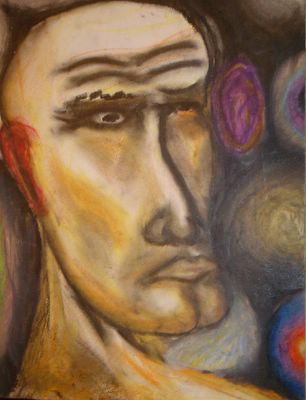
A Rotoscoped Animation of Rotary Nystagmus Due to BPPV
Labels: animation, art, claymation, dix-hallpike, epley maneuver, health, medicine, rotoscope, stop motion, Toon Boom
Labels: bulletin board, claymation, entertainment, photography, stop motion, technology, time-lapse
BPPV is a disorder of the inner ear which is a cause of vertigo in approximately 20% of patients who present to their doctor with this complaint. This occurs when otoconia are dislodged from their usual position within the utricle and they migrate over time into one of the semicircular canals (the posterior canal is most commonly affected due to its anatomical position). This Diagnosis can be made using the Dix-Hallpike Test and is frequently treated by use of the Epley Maneuvers.
In my practice, I make this diagnosis more often than many of my peers, mostly I think because I look for it. To me, it is about the only bright spot when dealing with the chief complaint of "dizziness". This is because treatment is so effective and no medicines are required. Patients have called back in a day or two just to tell me that it worked because they are so surprised. Honestly, when I first started doing it, I was surprised as well. It seems like most of the family practitioners that I talk to have heard of this simple procedure, but most of them never try it because for some reason it seems too magical or tricky. For that reason I have created this claymation video to serve as a visual aid for those who are interested. Keep in mind that this is not my specialty, this is not intended to replace a visit to your doctor if you experience vertigo, and you shouldn't try this if you don't have the training to know when you shouldn't do it. This is just a fun little video to give you very basic idea of how it is done. I will gladly accept any criticism of the technique, but don't expect me to change the video because the patient has been thrown out. Enjoy.
Labels: claymation, dix-hallpike, entertainment, epley maneuver, medicine, photography, stop motion
This video was made during the same session as the Dix-Hallpike and Epley Maneuver video was made. I was going to try to demonstrate Rotary (torsional) nystagmus which becomes apparent with a positive Dix-Hallpike test. However the clay was too soft and the toothpicks in the back of the eye kept moving around instead of the eye moving properly, so I just did the best I could at making the eye look around and look as real as possible.
Labels: claymation, dix-hallpike, entertainment, epley maneuver, medicine, photography, stop motion
Back in July when I made my first claymation video, I thought I was going to make a ton of them, but since there aren't enough hours in a day, I haven't made another one until yesterday. I tried to produce a realistic slow motion video of a water drop falling into a bowl of water using one of my sons bowls and his blue play-doh. I only took 66 pictures and created a movie sequence using Quicktime pro. The video is not too realistic looking but it turned out better than expected. I spent about 2 hours and 15 minutes on the entire project. The above movie is small but good quality for a quick download. You can go to my time-lapse video download page to view the large version and a small WMV/AVI version.
Labels: claymation, entertainment, photography, stop motion